What Portage's Celery-Farm Soil Still Means for Your Basement and Your Disclosure Form
August 20, 2026
August 20, 2026
A Michigan Seller's Disclosure Statement on a Portage home can say "no known radon issues" while describing a house that has never had a radon test run inside it. Same blank box. Same word "no" checked in the same column. Two completely different situations sitting under one identical answer.
That gap matters more in Portage than in most Southwest Michigan cities, and the reason has nothing to do with anyone hiding anything. It has to do with what's underneath the house.
Michigan's Seller Disclosure Act requires sellers to report what they actually know about a property, including any radon test results on file, even a favorable one. What the law does not require is that a seller test in the first place. A seller who never ran a test has nothing to disclose, and "nothing to disclose" and "no" look identical on the form.
The same logic applies to basement and crawl space water history. The form asks whether the seller has seen evidence of water in those spaces. It doesn't require an inspection of areas the seller couldn't reasonably access, and it isn't a substitute for the buyer's own inspection.
| What the disclosure form says | What it actually confirms |
|---|---|
| "No radon issues known" | Either tested and clean, or never tested at all |
| "No water in basement" | No water the seller personally observed, not necessarily none has occurred |
| Blank or "unknown" | The seller is being honest about not knowing, not concealing anything |
None of this is a loophole. It's simply how a good-faith, knowledge-based disclosure law works. But it means the form tells a buyer what the seller happened to learn, not necessarily what a test would find.
Portage's soil has a specific origin story, and it isn't subtle once you know it. A glacier that pushed south through Michigan stalled out just north of what's now Kalamazoo County, and the meltwater left behind vast flats of black, loamy muck sitting directly on top of water-impervious clay. Dutch immigrant farmers arrived in the late 1800s with generations of experience draining wet marshland, and they turned that muck into celery fields that stretched from north Kalamazoo down through what is now Portage. By the 1880s, Portage had earned the nickname "Celery City" of the nation, and celery production stayed a defining industry there into the mid-twentieth century, according to the city's own history page.
The celery is gone. The clay underneath it isn't. Neighborhoods built on former muck fields sit on the same drainage patterns and the same impervious clay layer that made this ground both perfect for celery and difficult for anything you want to keep permanently dry. Celery Flats Interpretive Center and the historic buildings relocated to Bicentennial Park are the visible reminder of that history, and the Portage River and Bishop's Bog still carry the same headwater wetland system through the city today.
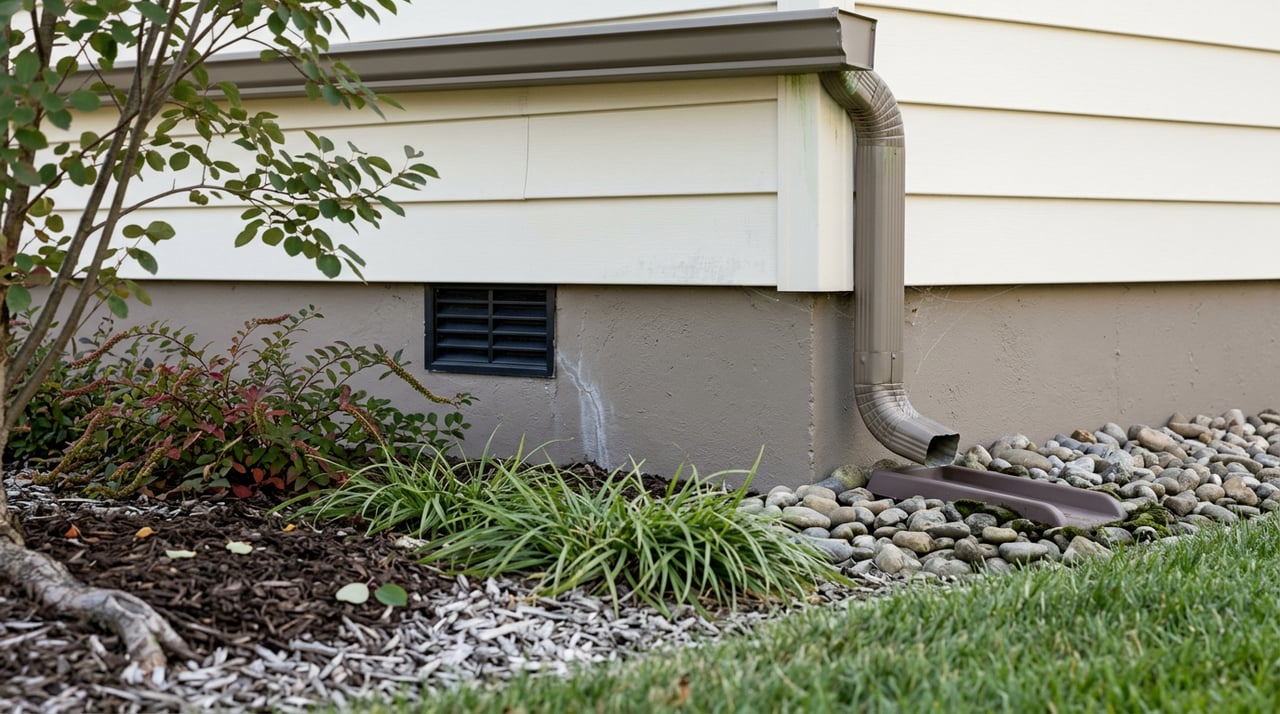
This history isn't trivia. It's the reason local radon and basement contractors describe the same handful of issues over and over in Portage specifically.
None of this means every Portage home has a problem. It means that when an inspector does flag radon or moisture, it's rarely a fluke. It's the ground doing what this particular ground has always done.
The Seller Disclosure Act (Michigan's Act 92 of 1993) requires the seller to hand over a completed disclosure statement before the purchase agreement is signed, or within 72 hours after acceptance. If that statement doesn't arrive, the buyer has the right to cancel the agreement. Once the buyer does receive it, they have 72 hours to walk away if something in it changes their thinking.
The statement itself is explicit about its own limits. It states plainly that the seller has not conducted inspections of generally inaccessible areas like the foundation, and that the disclosure is not a warranty or a substitute for the buyer's own inspection. In other words, the law was written knowing the form has gaps, and it builds the buyer's actual inspection into the process as the real check, not an afterthought.
That's the practical takeaway. The disclosure form is a starting point built on the seller's memory and paperwork. The inspection, and any radon test the buyer orders directly, is where Portage's specific soil history actually gets tested against the specific house.
Two separate trackers are pointing at the same underlying pace this summer. Zillow's June 30, 2026 update puts the average Portage home value at $304,262, up 5.0 percent over the past year, with homes going to pending in around 6 days. Movoto's July 2026 read on the market shows homes listing at a median $350,000 and spending a median 23 days on the market before selling, roughly the same pace as July 2025. Those two numbers are measuring different stages of a sale, one clocking how fast a home attracts an accepted offer and the other clocking the full run to closing, but neither suggests a buyer has months to sit on a decision.
A short-term radon test needs to run under closed-house conditions for a minimum of 48 hours, typically 2 to 7 days, to produce a reliable screening result. A buyer who waits until after the general home inspection is done to think about ordering a radon test can easily run out of runway inside an inspection contingency window that short. Ordering the test the same week the contract goes into place, rather than treating it as a follow-up step, is the difference between having real data before a decision deadline and guessing.
If you're buying:
If you're selling:
Does every home in Portage have a radon or moisture issue? No. Foundation type, age, and whether a specific lot sits over old muck or higher glacial ground all vary block by block. The point isn't that every home has a problem. It's that "no issues reported" on a disclosure form can mean tested and clean, or it can mean never tested, and the form alone won't tell you which.
Can I just ask the seller whether they ever tested? Yes, and it's a reasonable question to raise through your agent. The disclosure form only requires the seller to report what they know, so a direct conversation about whether a test was ever run, and where in the house, can surface detail the form's structure doesn't require them to volunteer on its own.
If you're weighing a purchase or a sale anywhere in the Greater Kalamazoo area and want someone who can walk through what a specific inspection report actually means for your situation, Benny Wesley has spent more than two decades serving this community, first in public safety and now in real estate, and is glad to talk through the details before you're staring down a deadline. Contact Benny to get started.
Stay up to date on the latest real estate trends.

Whether you're buying your first home, searching for your dream property, or preparing to sell, I'm here to guide you every step of the way. With local Michigan market expertise, personalized service, and a commitment to your goals, I make every real estate experience smooth and successful.

Benny Wesley
5136 Lovers Lane Suite 104 Portage, MI 49002